
How AI Wearables Could Change the Construction Industry

Artificial intelligence is rapidly moving beyond computers and smartphones, with wearable technology emerging as one of the next major areas of development.
While much of the current conversation around AI wearables has focused on consumer products, overseas construction markets are already beginning to explore how these technologies could improve safety, communication and productivity on-site.
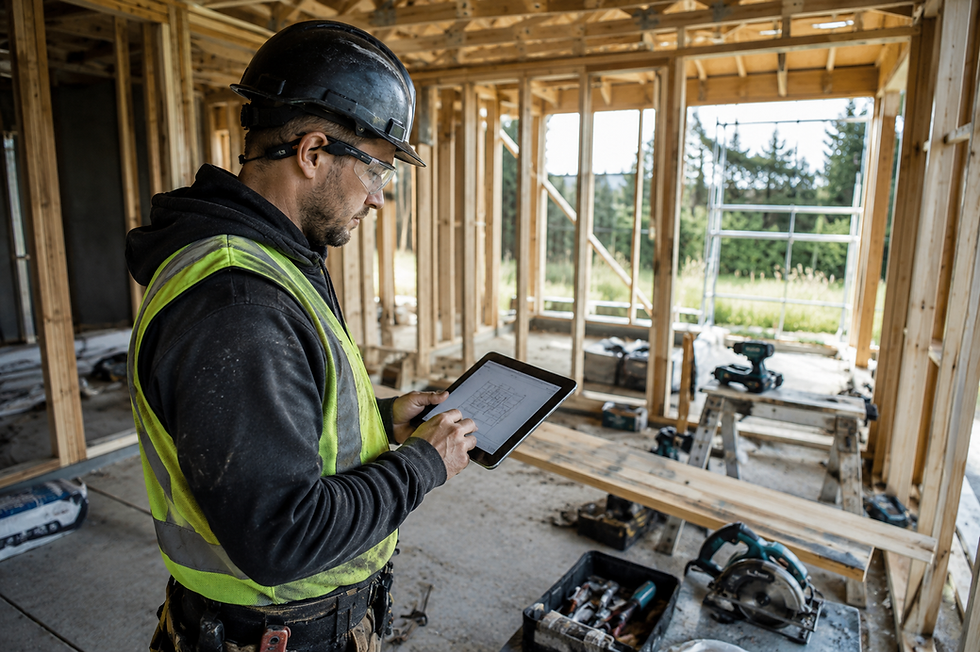
From AI-powered smart glasses to intelligent safety equipment, wearable technology has the potential to significantly change how construction teams access information and interact with the job site environment.
Although the industry is still in the early stages of adoption, the direction of travel is becoming increasingly clear.
Why Wearable Technology Is Gaining Momentum
The rapid development of AI assistants, voice recognition and real-time data processing has accelerated interest in wearable devices across a range of industries.
Unlike traditional mobile devices, wearables allow users to access information hands-free while continuing to work, move and interact within active environments.
This creates obvious advantages for industries such as construction, where workers are constantly moving between tasks, locations and teams throughout the day.
Globally, major technology companies are investing heavily in:
AI-powered smart glasses
Voice-controlled assistants
Real-time translation systems
Environmental sensors
Productivity monitoring tools
Augmented reality interfaces
As the technology improves, many of these systems are beginning to move beyond consumer applications and into practical workplace use.
Why Construction Is a Natural Fit
Construction sites are highly dynamic environments where quick access to information can have a direct impact on efficiency, coordination and safety.
Builders, site managers and subcontractors regularly rely on plans, measurements, specifications, communication and reporting while working in physically demanding conditions.
Wearable AI systems could eventually allow workers to:
Access drawings and specifications hands-free
Receive real-time safety alerts
Communicate instantly across sites
Record site progress automatically
Translate conversations between multilingual teams
Receive installation guidance while working
Rather than replacing skilled tradespeople, these technologies are more likely to function as support tools designed to improve workflow and reduce friction on-site.
Smart Glasses May Become One of the Biggest Developments
One of the most interesting areas of development is AI-enabled smart glasses.
Several overseas companies are currently developing systems capable of displaying:
Site drawings
Measurements
Installation instructions
Checklists
Hazard notifications
Remote video support
For example, a worker could potentially view installation details or connect with a remote technical expert without needing to stop work to check a phone or laptop.
In large commercial projects, wearable systems may also improve coordination between project managers, engineers and site teams by allowing faster access to real-time information.
While widespread adoption is still likely some time away, the technology is evolving rapidly.
Safety Could Be a Major Driver
Safety is another area where wearable technology may gain traction within construction.
Internationally, some companies are already trialling:
Smart helmets with environmental monitoring
Wearables that detect fatigue or heat stress
Proximity warning systems around machinery
Real-time incident reporting tools
Fall detection systems
As health and safety requirements continue to evolve globally, wearable technology may become increasingly integrated into site management systems.
Particularly on larger projects, the ability to monitor environmental conditions and improve communication could provide significant operational advantages.
Challenges Still Remain
Despite the potential, wearable AI systems still face several barriers before becoming mainstream within construction.
Current challenges include:
Battery life limitations
Durability in harsh environments
Connectivity issues on remote sites
High initial costs
Worker adoption and usability
Privacy and data concerns
Construction sites are demanding environments, and many technologies that work well in office settings may struggle under real-world building conditions.
For wearable systems to succeed long-term, they will need to prove they can deliver genuine practical value without slowing workers down.
What This Could Mean for the Future
The construction industry has traditionally been slower than many sectors to adopt new technology, but that is beginning to change.
Labour shortages, increasing project complexity and growing pressure around productivity are all driving interest in smarter construction workflows.
While AI wearables are unlikely to become standard equipment overnight, they are rapidly moving from concept to practical development.
Over the next decade, wearable technology could become an increasingly common part of how construction teams communicate, access information and manage site operations.
For an industry built around practical problem solving, the potential applications are significant — and global markets are already beginning to take notice.

Comments